Mock Trial #3: Brown v. Board of Education
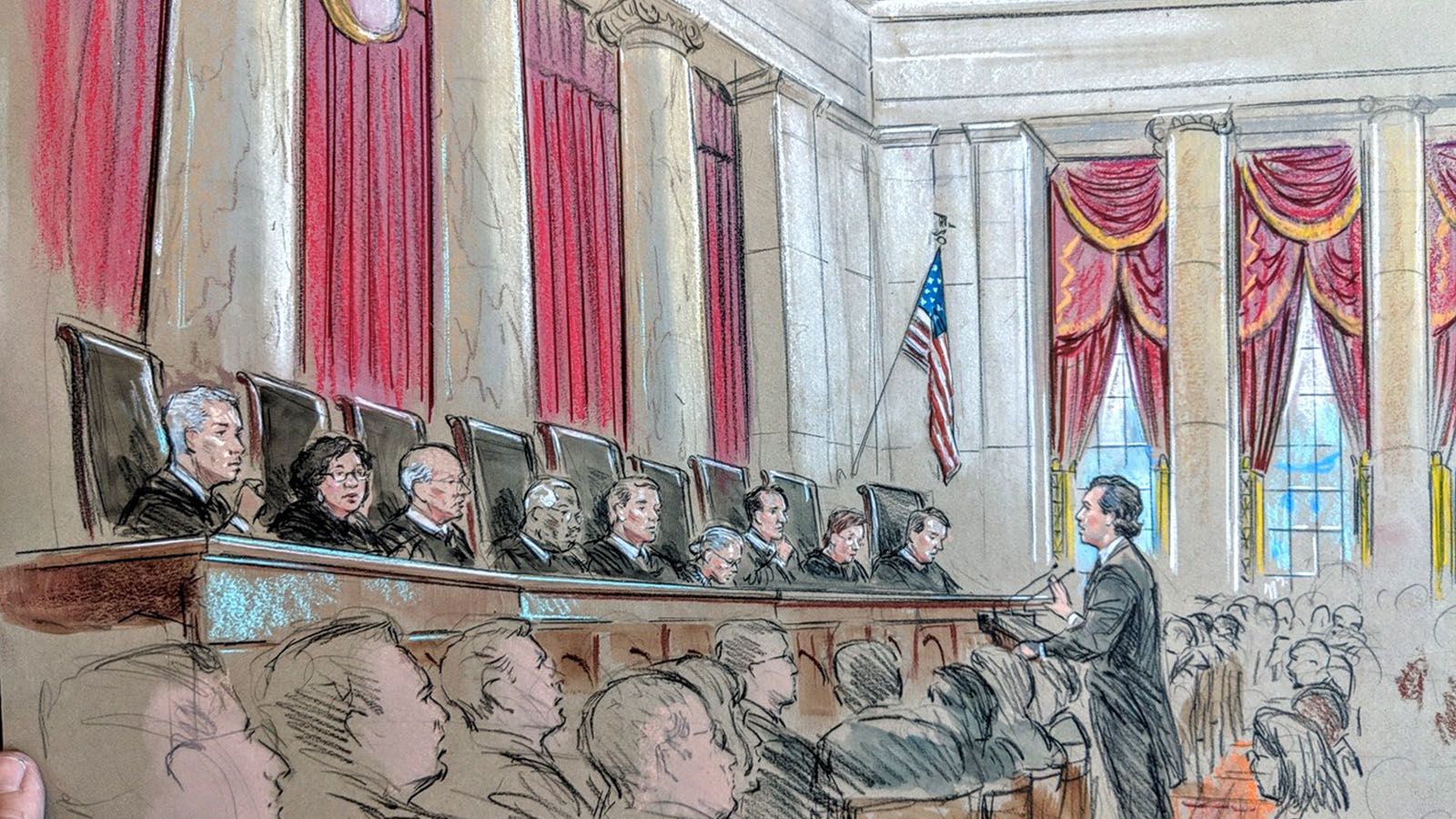
The mock trial was on the case of Brown v. Board of Education. The name Brown v. Board encapsulates a collection of five different cases. (uscourts.gov) The issue at debate in all of these cases was segregation in schooling. I argued on the side of Brown, in favor of desegregating schools. I made the legal argument for our side. The script I used during the trial is below:
Hey everyone. I’m Brad and I will be making the legal argument on the side of Brown.
The issue of today’s trial is segregation in schools. For this case we have two important laws to look at: The fourteenth amendment and the supreme court precedent set by the 1896 case “Plessy v. Ferguson.” The fourteenth amendment clearly states that no person shall be denied equal protection of the law. The Plessy v. Ferguson case created a precedent that segregated schools did not violate the fourteenth amendment because they were "separate but equal." This is not true. To be separate inherently means to be unequal, especially as the law is carried out in the United States.
In the most literal sense, the separate but equal doctrine is by concept, denying people the equal protection of the law guaranteed by the fourteenth amendment. Quite simply, white people are banned from black schools and black people are banned from white schools. Even if these schools did provide equal opportunity to both peoples, which they do not, it is still banning an entire group of people from a public location that another group is freely allowed to enter. That is NOT equal protection.
So separate but equal is at its core, a broken ideology, but how it is practiced in the United States further breaks the equal protection clause. Black schools are consistently of lower quality than white schools. Looking at the raw data, black students leave their schools less educated than white students. Black schools are underfunded and overcrowded, which is shown to have a detrimental impact on education. Black schools will recurrently not have enough desks for every student. Black students also have less access to educational resources. Black Teachers were severely underpaid when compared to white teachers, and school resources such as books were just whatever was leftover from white schools. (National Museum of African American History and Culture) All of these factors combined have lead to white students being four times as likely to graduate high school compared to their black counterparts.
The court has made a deliberate decision to take the Brown v. Board collection of cases and I think they have for a reason. It is time to shatter the Plessy v. Ferguson precedent and give every student the equal protection they deserve. I hope the court will make the right decision.
That was my prepared speech, but I didn't actually say all of that. I used this as an outline for what I was going to say, not what I actually was actually going to say word for word. Basically I just glanced at the paper now and then to remind myself of the key points. In my opinion this makes my speeches flow better since I can just talk naturally instead of following a script word for word.

I knew that black schools were just lower quality than white schools, but actually concretely proving that was surprisingly difficult. As the legal argument, I had to ensure that my statements were absolute and accurate with the law, to do this I started researching concrete statistics that showed that black schools were lower quality than white schools. I was hoping to find something like "black schools were funded 37% less," but I wasn't able to. Segregation is viewed as so obviously bad that it isn't necessary for us to have statistics to prove that it's bad, because it's so obvious to us. As a result many online articles speaking of the history of the era used inexact facts like "black schools were funded less than white schools." I did manage to find one great statistic across a few different sources though: "In 1950, only 1 in 10 Black adults graduated from high school compared to 4 in 10 white adults." (soeonline.american.edu) This was the oomph I needed to make my argument hit hard, so my strategy was to build my argument up to this statistic.

ack students.
Sources:
https://www.naacpldf.org/brown-vs-board/
https://nmaahc.si.edu/explore/stories/struggle-against-segregated-education
https://constitution.congress.gov/constitution/amendment-14/
https://www.archives.gov/milestone-documents/plessy-v-ferguson
Images:
https://www.pbs.org/wgbh/frontline/wp-content/uploads/2015/11/2014714232618_728.jpg


No comments:
Post a Comment