Thursday, September 28, 2023

Town Hall Meeting Reaction

Interesting People I Learned About (Pro Slavery)
The town hall meeting shined light upon a lot of interesting people in the pre civil war era that I had not heard of before. Among the pro slavery speakers, there we're many that stood out to me. To support an institution like slavery you'd have to have some pretty rigid and specific ideas to justify it, and this was the case for many of the pro slavery speakers. Many of them shared common characteristics, they were mostly white supremacists, they were mostly wealthy people, and of course all of them were white. There were a few that stood out to me quite well, such as Preston Brooks, a congressman who hit another congressman over the head with a cane during a debate about slavery. It really goes to show how divided the country was at the time. The most unique of the pro slavery speakers was Abraham Lincoln. Obviously today we know Lincoln was the one who would free the slaves, but before that his view on slavery was that of indifference. This was the most unique argument to me because of how apathetic it was, while the other pro slavery arguments were fiercely in support of slavery, Lincoln's argument didn't believe in the issue that strongly and was more concerned with keep it in place only to impede further division in the country. The last pro slavery speaker who really stood out to me was Jefferson Davis. He was the first and only president of the confederacy and what stood out about him was that he believed in treated his slaves "well." I put well in quotes because you can only treat a slave so well, forcing someone to do intense physical labor against their will and without compensation will never be treating them well, but Davis treated his slaves less bad than other brutal slave owners. He made an effort to avoid corporal punishment and treat his slaves with respect and like "humans." (Again enslaving someone isn't treating them like a human but I digress) I found it really interesting that someone with such deep ties to the confederacy was so relatively courteous to his slaves.

Interesting People I Learned About (Anti Slavery)
The pool of anti slavery speakers was much more diverse than that of the pro slavery group. Each person's reasoning for being against slavery was different and they came from different backgrounds and taken different paths in life. The first set of the anti slavery speakers that stood out to me where the former slaves. Nat Turner, Henry Highland Garnet, Sojourner Truth and of course Frederick Douglass are a few examples. I find the perspective of these people to be the most interesting and ultimately the most important. I couldn't imagine what it was like to be a slave, and these people actually lived through it. It's inspiring what these people were able to do despite such a serious setback in life. Frederick Douglass was able to teach himself how to read and become an extremely prominent figure despite many years of his life being wasted to slavery. Unfortunately I know that with every one of these success stories, there was a million other slaves who weren't so fortunate. I wonder what brilliant minds or ideas we lost to the people who could've had them being enslaved. Another anti slavery speaker I found really interesting was the Grimke sisters. What stood out to me is that unlike other abolitionists, the Grimke sisters were actually born into a slave owning family, and they were able to see how horrible it was first hand. I'd imagine many others in the situation would go along with slavery because their parent would ingrain it in their head that it was okay, which is what makes the Grimke sisters' story even more powerful, that they were able to break past that. 


Monday, September 18, 2023

The Frederick Douglass Game: John Brown

Here is the script for my town hall speech. My person is John Brown.


John Brown Town Hall Meeting Speech

Hey everyone, I’m sure you all know of me because of recent events. I’m John Brown, fifty-nine
years old, born in Connecticut in eighteen hundred. Now, even though the government has sentenced me to die in a month's time, I was still allowed to come here today to speak on slavery. I look here in this crowd and what lies before my eyes is a group of cowards. You slave owners have no morals, you have no god. And those words that just came out of my mouth will do nothing to change that. Nothing anyone can say will change how you feel. I, John Brown, am now quite certain that the crimes of this guilty land will never be purged away but with blood. Now, these cowards in the crowd here, I know who they are. Very simply they are the ones who refuse to look back at me as I look out at them. They fear this face because it is the face of a man who isn’t afraid to do what is necessary. One month ago on the 16th of October, I, and twenty one of my men, successfully captured the U.S. rifle factory at Harpers Ferry Virginia. I was going to provide slaves with the weaponry they needed to rise up against their so-called “masters.” I managed to capture a few slave owners, and bring an end to a few others. But if this plan had gone as I had hoped, I would not be on death row and set to die in a month’s time. This thought of slaves rising up, it scared the cowards of this audience more than anything else, and the local army was called before any real progress could be made. Had I so interfered on behalf of the rich, the powerful, the intelligent, the so-called great, or in behalf of their friends, and suffered and sacrificed what I have in this interference, every man in this crowd would have deemed it worthy of reward, not punishment. Now some of you cowards may see my imminent death as a relief, relief that a man who is like me, who is not afraid, is no longer out there. That is  not the case. This is far from the end, my death is only the beginning. Very soon the people will realize that you cowards don’t listen to reason, you don’t listen to god, you only listen to blood. There are more people out there like me who will do what is necessary for the right of the people to be free. I was able to amass an army of twenty one men to raid harpers ferry, it would be foolish to think there aren’t more than that. So cowards, be afraid. Because justice is coming. And if it is deemed necessary that I should forfeit my life for the furtherance of the ends of justice, and mingle my blood further with the blood of my children and with the blood of millions in this slave country whose rights are disregarded by wicked, cruel, and unjust enactments-I submit: so let it be done.

Final Notes:

I think John Brown is a really interesting figure of the era. It is very easy to agree with his cause, but a lot harder to agree with his methods. He used violence and terror to send his message, but ultimately he was right. I used one of his quotes and looking back we can see it as almost prophetic: "I, John Brown, am now quite certain that the crimes of this guilty land will never be purged away but with blood." A year and a half later, the civil war would begin. John Brown's actions are hard to take a moral stance on, because ninety nine percent of the time, we like to say violence isn't the answer. But in this case, John Brown was right about violence being necessary to end the institution of slavery. His methods went against the American ideal of peaceful protest, but he was fighting for the ultimate American ideal: freedom. He fought harder and more passionately than most anyone else at the time, and many northerners saw him as a hero for this.

Other quotes I used:

"Had I so interfered on behalf of the rich, the powerful, the intelligent, the so-called great, or in behalf of their friends, and suffered and sacrificed what I have in this interference, every man in this court would have deemed it worthy of reward, not punishment." (I changed court to crowd in my speech so it fit the setting)

"And if it is deemed necessary that I should forfeit my life for the furtherance of the ends of justice, and mingle my blood further with the blood of my children and with the blood of millions in this slave country whose rights are disregarded by wicked, cruel, and unjust enactments-I submit: so let it be done."


Sources:

https://www.archives.gov/publications/prologue/2011/spring/brown.html

https://www.battlefields.org/learn/biographies/john-brown

https://www.nps.gov/people/john-brown.htm

http://www.nellaware.com/blog/john-brown-quotes.html#:~:text=%E2%80%9CI%20have%20only%20a%20short,slave.%E2%80%9D%20%E2%80%94%20John%20Brown.

https://www.gilderlehrman.org/sites/default/files/inline-pdfs/05508.051_FPS.pdf

https://mrnussbaum.com/uploads/activities/images/brown.jpg

Thursday, September 14, 2023

Comm3390 Supreme Court - Reflection

 Comm3390 Supreme Court - Reflection


What did I learn about the supreme court that I didn't already know? From the set of two videos I learned about how the oral argument process actually works. A lawyer comes up before the court and argues their opinion to all nine justices at the same time. I also learned that to the justices the oral argumentation process is almost like a conversation between themselves, where they'll sometimes use their questioning as a way to communicate with each other. I found that very interesting.

What is the most important takeaway point about the supreme court? To me the most important takeaway was how important the opinion is. I've always thought of supreme court decisions as a binary "yay" or "nay," in terms of how a precedent is set, but actually its much more complex than that. A large amount of the precedent setting of a supreme court case comes from the written opinion at the end, because that opinion is now the interpretation of the law. If someone wants to make an argument using a supreme court case precedent, how they use that will be based off of the opinion.

What is the most surprising thing I learned? The most surprising thing I learned was how much work goes into writing the opinion. I've always thought of the opinion as more of an afterthought or just a justification/explanation, but it's actually the most time consuming part of being a supreme court justice. These opinions can be up to eighty pages long, that is really surprising to me that they have that much to say about a case.

How did the video change how I view the supreme court? I've always viewed supreme court justices as busy, since they have to be constantly reviewing cases to determine which ones they actually want to take, but it goes so much further than I thought. On top of that they also have to write opinions, which can take weeks, make oral arguments, and have the discussions afterwards. I wonder how many hours a week they work and when they get time off.

Bible Team Challenge: Does The Bible Support Slavery?

Introduction

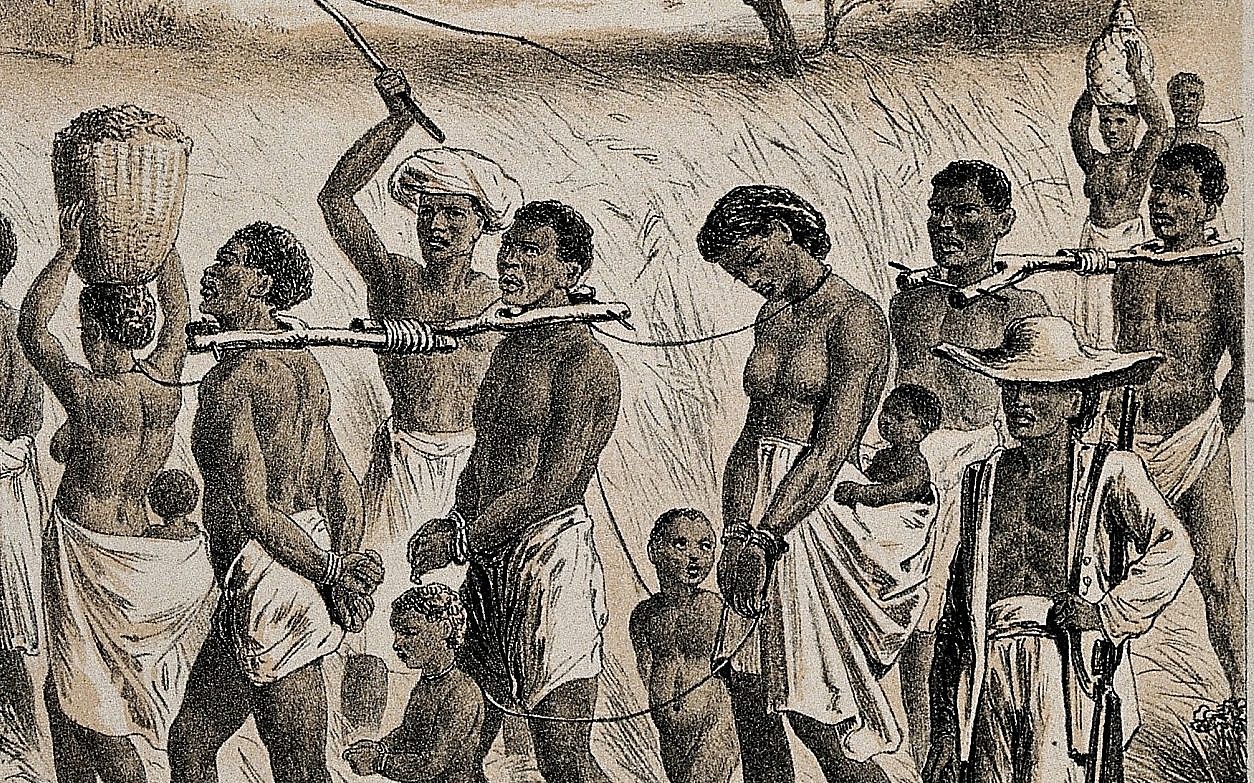
    Today, slavery is a pretty clear cut issue. The answer to whether or not it should be accepted is widely agreed to be no across the political spectrum. Nobody seriously debates over slavery today because to suggest that it should be legal is morally reprehensible. However, there have been debates over slavery, many debates. These debates took place in a time where slavery was legal, and in these times, debates of morality were commonly argued through the perspective of religion. This post aims to present two arguments about slavery, solely through the lens of Christianity. 


Yes, The Bible Does Support Slavery (Elliot and Brad)

    The Bible views slavery as normalized. Numerous times The Bible mentions slavery casually without ever prefacing it with words of disapproval. From this it can be surmised that slavery is acceptable. The Bible does view certain aspects of slavery as sinful, but slavery, as it was practiced in the United States in the times of the late eighteenth century to the early nineteenth century, is permissible. 

    Leviticus 25:44-46 makes many statements which align with how slavery was practiced at this time. It can concluded that the slave trade is allowed from the line “Your male and female slaves are to come from the nations around you.” Slave breeding and auctioning is also allowed from the line “You may also buy some of the temporary residents living among you and members of their clans born in your country, and they will become your property.” This line also specifically designates slaves as property. The Bible also specifically states that slaves may be inherited from the next line: “You can give them to your children as inherited property and can make them slaves for life.” Thus the slave trade as a whole as it was practiced in the United States, is permitted by The Bible. 

    The Bible’s words also align with how slave owners treated their slaves. From Exodus 21:20-21: “When a man strikes his male or female slave with a rod, and the slave dies under his abuse, the owner must be punished. However, if the slave can stand up after a day or two, the owner should not be punished because he is his owner’s property.” This unambiguously states that corporal punishment against slaves is permissible, as long as the slave is not killed from the punishment. It also reaffirms that slaves are property to their owners. Furthermore, this excerpt and the surrounding context says nothing about the reason for which a slave shall be beaten, meaning that it can be reasoned that slaves can be beaten at any time for any reason as long as the beating does not result in the death of the slave.


    Modern assessments of Christianity often view slavery as a sin. The Catechism of the Catholic Church 2414, an over 900 word articulation of the modern catholic Christian viewpoint, states that enslavement is a sin under the seventh commandment. The seventh commandment, “thou shall not commit adultery”, is completely unrelated to the issue of slavery however. Adultery strictly means a relation between a married person and someone other than their spouse, this has nothing to do with slavery. Even if modern Christian organizations wish it wasn’t true, the bible, and consequently the word of god, allows slavery as it was practiced in the United States. Most of the bible’s pro slavery sentiment comes from the old testament, which is the basis of the bible and is a mandatory part of any translation or accepted version of the bible. Even the new testament features ideas in support of slavery.


No, the bible does not support slavery. (Kasen and Johnathon)

    The bible uses the word slavery and servants in biblical times the word slave was seen as servants. In the bible a common way to pay off debts was to do work under the person you owe debts to as a servant.  The Bible has considered slavery a sin in some of its testaments and religions; it's a sin to participate in slave trades and slavery ownership. Most religions also were against slavery and believed it had been a sin. 

    In the Catholic Bible and religion the bible says about the seventh commandment for as stated: “The seventh commandment forbids acts or enterprises that for any reason - selfish or ideological, commercial, or totalitarian - lead to the enslavement of human beings, to their being bought, sold and exchanged like merchandise, in disregard for their personal dignity.” This quote represents that slavery is sin and is considered selfish. This quote also represents the fact that this commandment forbids slavery and all acts that lead to it. The Catholics as stated earlier that this is a sin.

    In the New Testament of the Christian Bible there are some references to anti-slavery movements and anti-slavery positions in the verse Timothy 1:10 the New Testament comments on other issues as well but keeps its main focus in this section on anti-slavery “the sexually immoral, men who practice homosexuality, enslavers, liars, perjurers, and whatever else is contrary to sound doctrine”. This verse says that slavery is also immoral and explains that those who practice it are not uncorrupted.


    It is definitely true that religions such as Christianity and Baptists especially condoned slavery at one point in history as did the different branches such as Baptism. The Southern Baptist Convention has originally admitted to slavery endorsement and admitted they were wrong about their positions on Slavery. They admitted to making mistakes in their beliefs in this quote and statement: “Be it further RESOLVED, That we lament and repudiate historic acts of evil such as slavery from which we continue to reap a bitter harvest, and we recognize that the racism which yet plagues our culture today is inextricably tied to the past.”  The Southern Baptist Convention is based on beliefs originally stated in the beliefs of the Bible and the Christian religion.


Conclusion

    Even if the texts that shape a religion have remained largely the same, religion is still constantly changing. What it means to be a Christian today is different from what it meant to be a Christian two hundred years ago. So while the bible has remained the same for hundreds of years, society's interpretation of it has not, and the unfortunate truth is that bad people use harmful interpretations of the bible justify malicious actions. Whether or not The Bible actually supports slavery is still up to interpretation, and this room for interpretation is what allowed slaveholders to continue pushing for slavery to stay legal in the United States for so long. It's important to look at the bigger picture for issues as large as slavery, and consider multiple perspectives and moral arguments. Confining focus to just The Bible can lead to bad people justify bad actions.


Sources:


https://www.cambridge.org/us/bibles/bible-versions#:~:text=The%20Revised%20English%20Bible%20updates,is%20good%20for%20public%20reading.


https://www.biblestudytools.com/dictionaries/eastons-bible-dictionary/adultery.html


Images:

https://nmaahc.si.edu/sites/default/files/styles/max_1300x1300/public/2022-12/2012_160_6_001.jpg?itok=-mYgn_x-

https://static.timesofisrael.com/www/uploads/2019/03/Group_of_men_and_women_being_taken_to_a_slave_market_Wellcome_V0050647-e1553444875888.jpg

https://media.istockphoto.com/id/1334238217/vector/hands-breaking-chain-shackles-cuffs-freedom-design.jpg?s=612x612&w=0&k=20&c=SKqpIt9D88BVI-_YDgPnbmvvK_oq-xBxtu5mYYS_Mbc=


Mock Trial #4 Reax

  Mock Trial #4 Reax The justice giving the final summary at the trial This week's mock trial was on the case of Board of Regents vs. Ba...