The Freedmen's Bureau Presentation
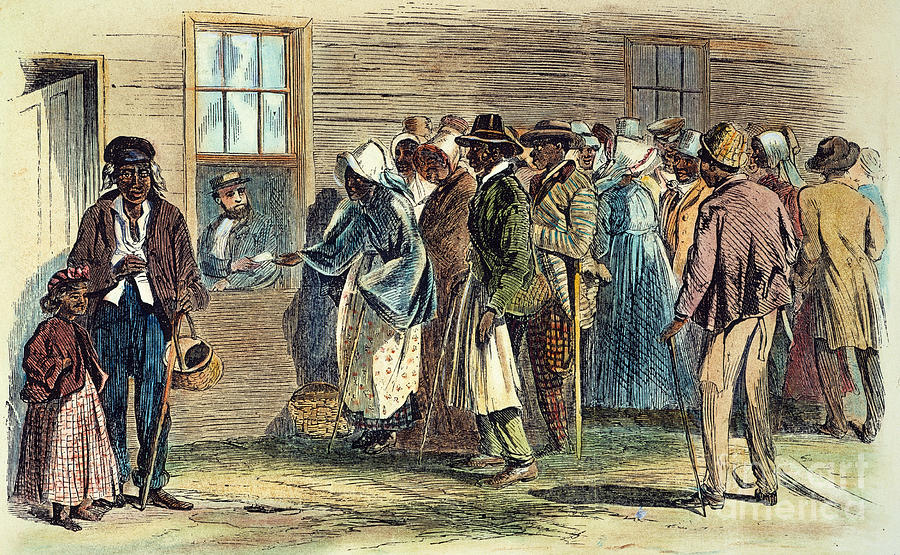
My EOTO topic was the freedmen's bureau, this is the script I followed for the presentation:
Hey guys it's Brad, my topic is the Freedmen’s Bureau.
After emancipation the union realized a problem. If they did win the civil war, there would suddenly be 4 million newly freed blacks and displaced whites with little to no possessions or property. To combat this, congress started drafting up the Freedmen’s Bureau. It would be a federal agency that would provide needs to displaced southerners, including freed slaves and poor whites.
It finally became law in 1865 and lasted until 1872. During its 7 years of operation it was able to accomplish quite a bit, despite heavy resistance to it. It existed in these states (show map of states on presentation) and was composed of district commissioners, who oversaw operations in the district, and agents, who actually provided the relief.
The bureau fed millions of people, built hospitals and schools, and even reunited former slaves with family members they were separated from.
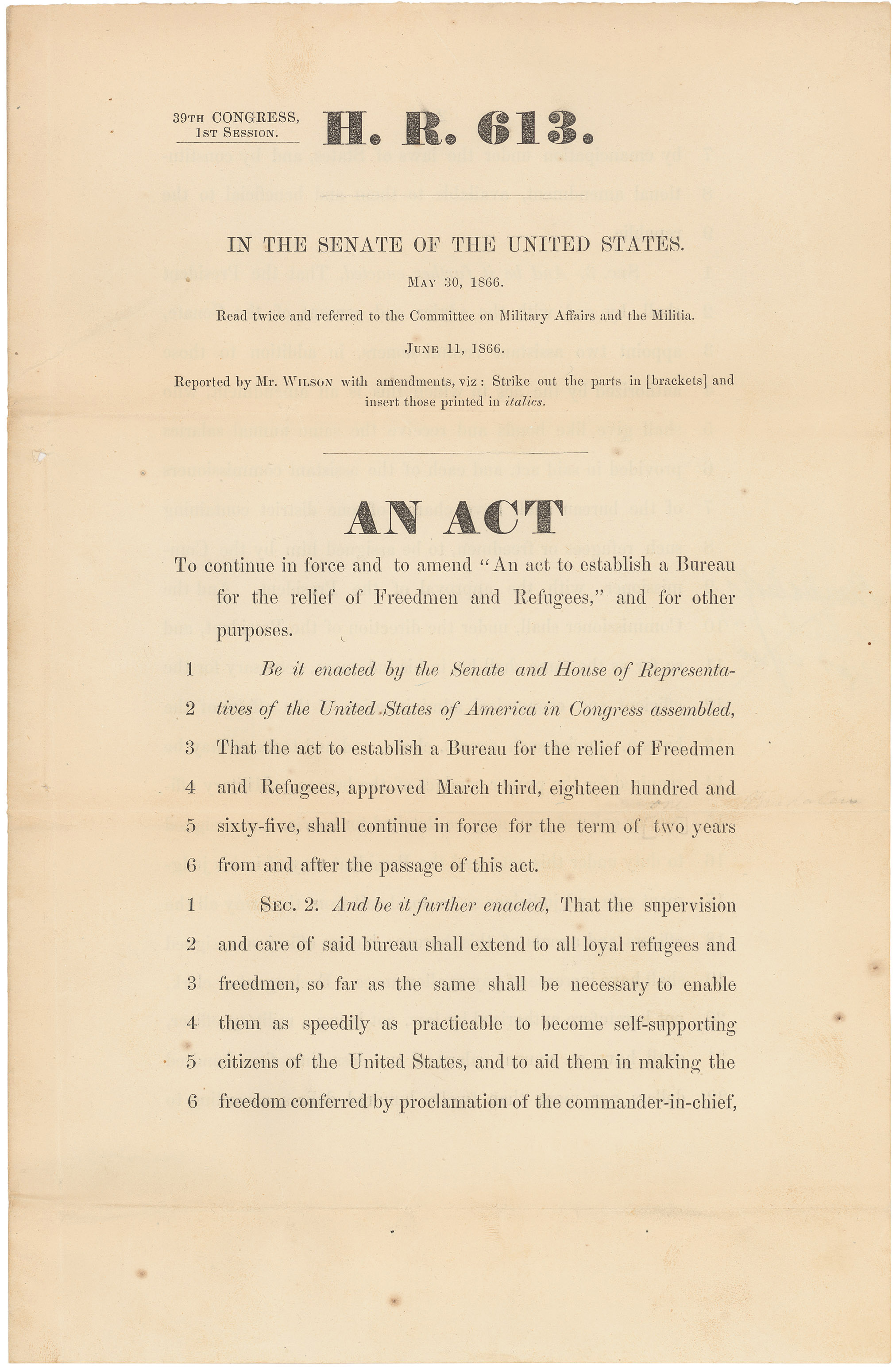
But it wasn’t exactly smooth sailing for the bureau. For one, the original law only allowed the bureau to operate for one year. When that year came and went, congress tried to extend it, and they did! Passing the bill with an overwhelming majority. Now our great president Abraham Lincoln just had to sign it into law, oh wait no he’s dead. Okay well Andrew Johnson will do it, oh wait no he’s racist. So Johnson vetoed the bill, saying it violated “states rights' ”. Fortunately, congress had enough votes to override the veto, but you know what they did? They AGREED with him. A few months later congress came to their senses and passed a new bill extending the duration.
Johnson constantly undermined the bureau’s operations. He would fire bureau agents for being too nice to black people. Yeah. The bureau also tried to take land confiscated from former confederates and redistribute it to the newly freed blacks. In response Johnson gave a presidential pardon to these confederates so they could have the land back. Bureau agents also faced harassment from southerners, including the klu klux klan. The bureau was abolished in 1872 due to pressure from southerners.
Ultimately, the freedmen’s bureau was stifled from achieving its goal. It did as much as it could with its lack of funding and heavy opposition.

I am very happy with how this turned out. The goal with my presentations is always to keep the audience engaged and I think I did a good job of that. Admittedly, the freedmen's bureau isn't the most interesting topic of all time, so I didn't have much to work with. One thing I did find interesting though was how congress tried to extend the lifetime of the freedmen's bureau but Johnson vetoed it, and they agreed with him. I found that so bizarre, how they had such a large majority over to pass the bill, (21-9!) yet Johnson was able to change the minds of enough people to have it really be vetoed. Nowadays it seems like congress votes completely on party lines, with disregard for what's actually the right thing to do. I just find it so shocking that congress was able to look at the issue with an open mind and actually decide to change their decision, especially in such a divisive era. Of course In my presentation I didn't say any of this, just showed a cute animation of the wacky antics going on between congress and the president.


No comments:
Post a Comment